
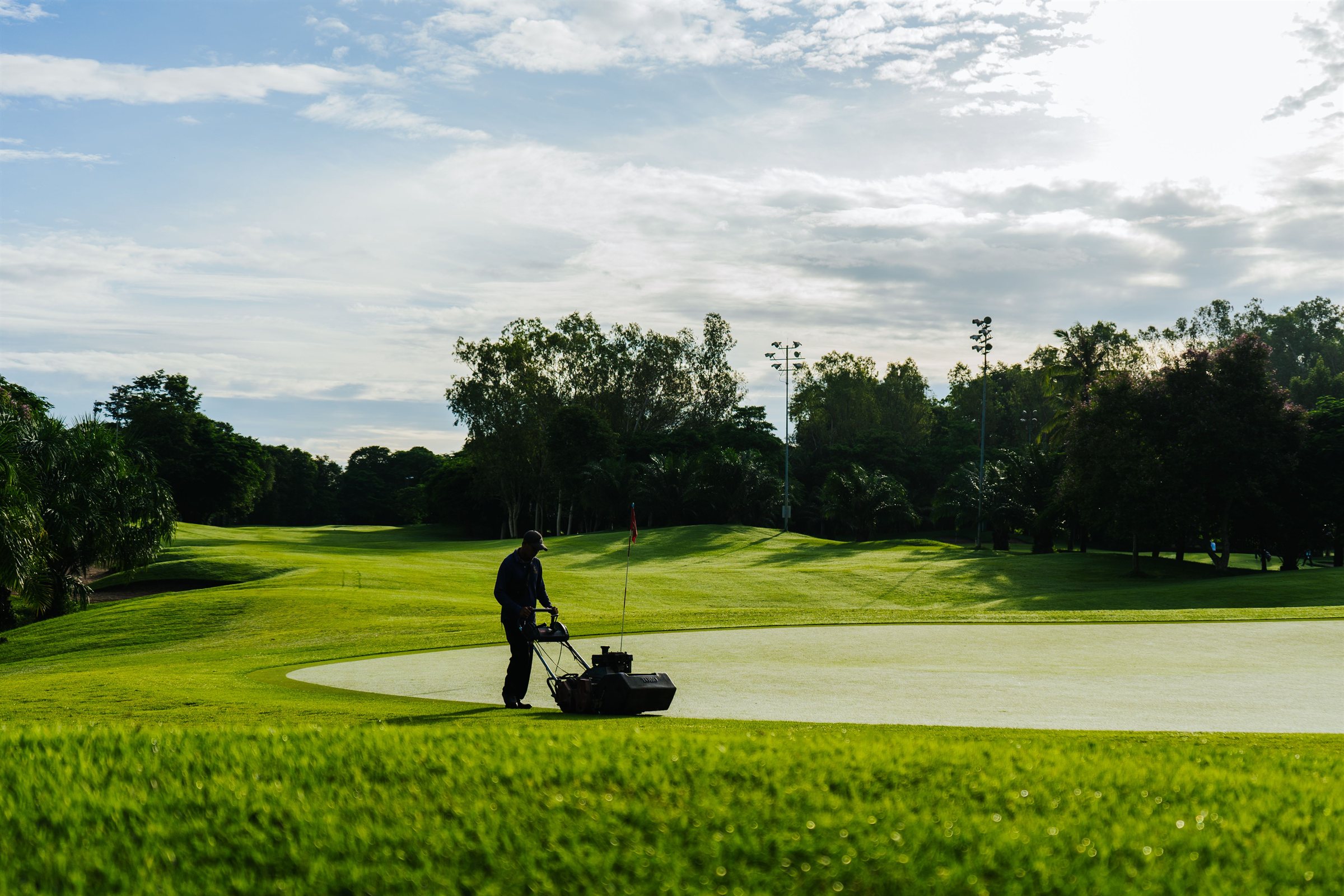
The most dangerous compliment after a successful tournament is: “Why can’t the course be like this every day?”
It sounds reasonable. The greens were smooth, bunkers freshly presented, fairways striped and every small detail finished before the first group. Members have seen what is possible and would like to keep it.
The difficulty is that tournament presentation is normally a peak, not a neutral setting. It may involve extra staff, earlier starts, overtime, reduced play, carefully timed agronomy and weeks of preparation. The course may look effortless precisely because a great deal of effort has been concentrated into a short period.
A club can choose a very high daily standard. It should simply understand what it is buying and what the turf must absorb.
“Condition” is several standards hidden inside one word
When golfers ask for better condition, they may mean different things:
- smoother and more consistent greens;
- firmer playing surfaces;
- shorter rough;
- more defined fairway edges;
- freshly raked bunkers;
- fewer leaves, clippings and unrepaired marks;
- stronger colour; or
- a tidier, more uniform appearance.
These do not have one price and they do not always point in the same agronomic direction.
More frequent mowing can sharpen presentation but increases machinery and labour use. Lower cutting heights may produce pace while reducing the plant’s margin for heat, drought, disease or traffic. More irrigation can preserve colour but soften the surface and consume a constrained resource. Daily bunker presentation can look excellent while taking people away from drainage, turf repair or irrigation work.
Before debating the budget, the club needs to say what standard it actually wants.
The real cost begins with people
Course maintenance is often discussed through products and machinery because those invoices are visible. The more important limit is frequently skilled time.
A daily task is not just the minutes spent doing it once. It includes preparation, safe travel around the course, cleaning, fuelling or charging, maintenance and the effect on every other job in the programme.
Adding another fairway cut, bunker rake or green roll may be perfectly justified. The question is what moves down the list:
- drainage inspection;
- irrigation repair;
- aeration and topdressing;
- tree and woodland work;
- machinery maintenance;
- divot and traffic repair;
- staff training; or
- project work that reduces future cost.
BIGGA’s guidance for golfers and club leaders is refreshingly direct: every part of a course requires maintenance, and expectations must be managed in line with staffing, budgets and available resources. The course manager should be part of the decision, not handed a visual target after it has been promised.
The plant also pays
The turf does not read the fixture list, but it responds to every maintenance choice.
Mowing removes leaf area. Rolling applies pressure. Traffic compacts soil and concentrates wear. Irrigation changes moisture and firmness. Fertiliser influences growth, which creates more mowing and organic matter to manage. Plant-protection options are becoming more restricted, making prevention and resilient grass selection more important.
The R&A’s Golf Course 2030 programme describes sustainable agronomy as producing good playing surfaces now and in the future. That final phrase is the test.
A standard is not sustainable merely because the club can achieve it on Friday. It must leave a realistic route to achieve it again next month and next season.
This is why planned disruption matters. Aeration holes, sand topdressing, overseeding and temporary changes can make the course look less finished for a short period. They are often the work that protects future playability. Cancelling them to preserve this week’s appearance converts an inconvenience into a larger future risk.
Tournament week is a different operating model
An event can justify a temporary concentration of resources. The club knows the date, can prepare surfaces towards it, arrange extra help and protect recovery time afterwards.
Daily golf has no finish line. The next morning still needs a safe, playable course.
That does not make high standards unrealistic. It means the daily promise should be written as a range, not a photograph:
- greens that are smooth, true and reasonably consistent;
- firmness appropriate to the design, grass and weather;
- fairways that provide a fair lie without demanding one shade of green;
- rough that preserves strategy without creating repeated searches;
- bunkers presented to an agreed frequency and repaired by priority; and
- course furniture that is safe, clean and maintained on a planned cycle.
The R&A Course Condition and Playability resources provide a framework and template precisely because no single presentation standard suits every facility.
Climate changes the cost of the same promise
The phrase “maintain it like the course down the road” can be misleading even when the road is short.
A free-draining links can stay open through wet weather but may need careful water management in a dry summer. A shaded parkland course may face disease pressure and slow drying. Nordic courses manage winter injury, ice and a compressed recovery season. Southern courses may have a longer growing season while facing water scarcity and severe heat.
STERF’s updated winter-stress handbook draws together current work on ice, cold damage and disease for Nordic turf. Its FAIR-WATER research is testing ways to retain acceptable cool-season fairway quality with little or no potable irrigation water. These are different operating problems, but they lead to the same conclusion: conditioning standards must begin with the site.
Metric comparisons can help, such as staff hours per maintained hectare, with acres shown for GB&I where useful. They should not become a crude league table. A hectare of intensively managed greens and surrounds is not equivalent to a hectare of out-of-play rough.
“Members pay for quality” is a fair argument
Course condition is central to the value of a golf membership. Boards should not use sustainability language to excuse poor planning, inconsistent basics or money spent elsewhere without explanation.
If bunkers repeatedly wash out because drainage has not been addressed, that is not a sustainable standard. If greens are bumpy because essential work keeps being postponed, members are entitled to ask questions. If the club advertises premium daily presentation, the budget and staffing should support the promise.
The answer is transparency.
Members should be able to see the difference between:
- an agreed everyday playing standard;
- weather damage outside reasonable control;
- planned agronomic disruption;
- a temporary event standard; and
- a genuine service failure.
Treating every brown area or maintenance mark as failure is unfair. Treating every failure as nature is equally unfair.
Build a standard the budget can recognise
A practical conditioning plan can be built in five steps.
1. Define playing outcomes
Set outcomes for smoothness, firmness, consistency, lie quality, search time, safety and seasonal availability. Avoid beginning with mowing frequency or colour.
2. Divide the course by priority
Greens, approaches, tees, fairways, bunkers, rough and out-of-play areas do not need the same intensity. Concentrating resources can improve the surfaces that matter most.
3. Price the routine honestly
For each promised task, record staff hours, machinery time, energy, water, materials and maintenance. Include weekends, absence cover and the time needed for setup and cleaning.
4. Protect resilience work
Put aeration, drainage, irrigation maintenance, overseeding and recovery windows into the calendar before adding decorative detail. If an event displaces essential work, agree when that work returns.
5. Review performance, not just spend
Track playing quality, closures, recovery, complaints, disease, water use and unplanned overtime. A budget that is on target but leaves the turf less resilient is not automatically good value.
Questions for the next course meeting
- Which three playing qualities matter most to our golfers?
- What daily standard have we actually promised?
- Which tournament details are temporary by design?
- How many staff hours are committed before reactive work begins?
- What essential work is repeatedly postponed?
- Which areas could be managed less intensively without harming play?
- Are we measuring consistency and resilience as carefully as appearance?
The course manager should answer these with the general manager and board, not after the financial decision has already been made.
The fair conclusion
“Perfect every day” is not wrong because it is ambitious. It is wrong when perfect has never been defined, costed or tested against the site.
Good conditioning is repeatable playability. It gives golfers reliable surfaces, allows the turf to recover and leaves enough staff time for the work that prevents tomorrow’s problems.
A tournament week can show how high the course can peak. The daily standard should show how well the club is managed.
Primary sources
- The R&A: Golf Course 2030 sustainable agronomy projects
- The R&A: Sustainable Agronomy
- The R&A: Research and Innovation
- The R&A: Agronomic and water management
- BIGGA: Greenkeeping information for golfers and club leaders
- STERF: Winter Stress Management handbook, updated 2025
- STERF: FAIR-WATER II
- STERF: Integrated pest management research
Evidence reviewed 24 July 2026. Cost comparisons should state the maintained area, staffing model, climate, machinery assumptions and playing standard before they are used in a club decision.