
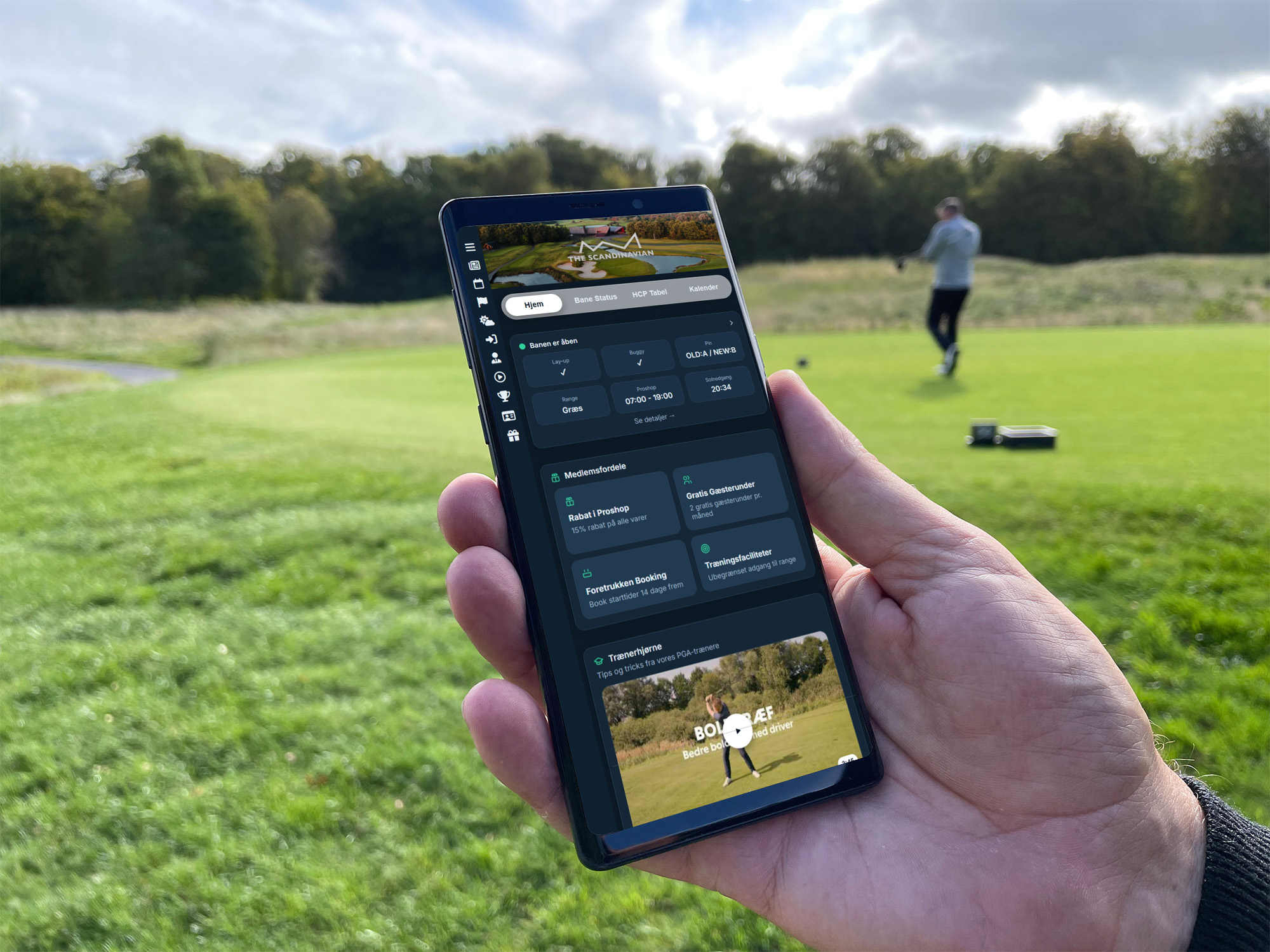
A golfer loses the connection beside the sixth green. A visitor cannot download the latest course information in the car park. The reception desk can see the tee sheet, but the card terminal or check-in screen is not responding.
There is no single feature called “offline” that solves all three problems.
The useful question is not whether an app works without Wi-Fi. It is which club tasks must continue, how current their information must be and what happens when the connection returns.
That turns a vague technology promise into an operating decision.
Start with the task, not the signal
Before discussing software, list the tasks people perform on a normal golf day. For each one, ask:
- What is the consequence if this task stops for ten minutes, an hour or a full morning?
- Does the user only need to read information, or must they submit or change something?
- How current must the information be?
- Which record becomes authoritative if two versions exist later?
- Who owns the fallback and who decides when to use it?
The answers will not be the same for an emergency instruction, a local rule, a score draft and a restaurant menu.
This is the approach behind the UK National Cyber Security Centre’s resilience guidance. It asks organisations to understand critical functions and dependencies, decide the order in which services should be restored and test the alternative arrangements. A golf club can use the same discipline without turning the clubhouse into an IT department.
Four practical levels of importance
Most club tasks fit into four useful levels.
1. Safety information needs an independent route
Emergency contacts, lightning procedures, evacuation instructions and the location of first-aid equipment should not depend on one app or one wireless network.
That does not mean reproducing every procedure on every tee. It means having a proportionate alternative such as clear signs, a printed staff procedure, working telephone or radio arrangements and people who know what to do.
An app can make safety information easier to find. It should not be the only place in which essential instructions exist.
2. Current operating information needs a dated fallback
Course status, closed holes, trolley restrictions, temporary greens and Local Rules affect the round being played. Golfers need to know whether the information on their screen is current.
A previously loaded page can be useful when the connection disappears, but only if it shows when it was last updated. “Course open” without a time can be worse than no message when conditions changed after heavy rain.
The fallback might be a cached read-only page, a starter’s sheet, a notice at check-in or a short printed daily course report. The R&A makes the Committee responsible for matters including Local Rules and course marking. Whatever channel the club uses, the official version and the person authorised to change it must be clear.
3. Transactions and score entry need a recovery rule
Writing information is more complicated than reading it.
A scorecard can be saved on the device and sent later, but the golfer should be able to see that it has not yet been submitted. The system also needs a defined response if the same score is sent twice, if one player changes it on another device or if the competition has closed before reconnection.
The same principle applies to check-in, buggy booking, locker access or a clubhouse purchase. A paper list or manual note can keep the operation moving, but somebody must later reconcile it with the main record.
“Works offline” is incomplete unless the supplier can explain:
- what is stored on the device;
- how the user can recognise an unsynchronised action;
- what happens after a failed or repeated submission;
- how conflicts are resolved; and
- how staff find items that never synchronised.
For some tasks, paper remains the simplest fallback.
4. Convenience content can fail honestly
News, sponsor messages, photo galleries and promotional content do not normally justify a complicated offline process.
If they cannot load, the service should say so plainly and let the golfer try again. A club does not need to engineer every inconvenience out of existence. Resilience should follow consequence, not ambition.
“Offline capable” is not the same as “everything is current”
Modern web technology can store selected content and support some functions when a network is unavailable. The W3C Service Workers standard is one of the technologies used to build offline-enabled web experiences.
That capability does not answer the club’s operating questions. A stored course map may remain useful all day. Yesterday’s trolley restriction may not. A locally saved score may be safe, but only if its pending status and later submission are handled properly.
Offline behaviour is therefore a set of deliberate choices:
- which pages are stored;
- how long stored information remains valid;
- which actions are allowed;
- what the user sees when an action is pending; and
- what the system does on reconnection.
A tick beside “offline mode” in a supplier comparison cannot describe those choices.
National coverage is not course coverage
National mobile reports are useful for understanding the wider market. They cannot prove that a particular handset will work behind the clubhouse, in a wooded hollow or beside a remote green.
Ofcom’s Connected Nations material, for example, distinguishes reported coverage from the experience at a specific place and device. The same caution applies when reading any national coverage map.
Courses create unusual conditions. Buildings, slopes, trees, crowded events, roaming settings and cross-border visitors can all change the practical experience. A Nordic resort with large distances, an Alpine course with steep terrain and an island links with visiting SIM cards may fail in different places for different reasons.
The only dependable club assessment is a walk-through.
Test the round people actually play
Choose common phones, a visitor account and a normal staff login. Then follow real journeys:
- arrive in the car park and find today’s course status;
- enter the clubhouse and check in;
- open Local Rules and emergency contacts;
- move around the course and enter a score;
- turn Wi-Fi off, then mobile data off;
- restore the connection and confirm what synchronises;
- ask a member of staff to handle the manual record afterwards.
Repeat the test when the course is busy. Include the basement office, terrace, halfway house and known weak areas. Record the phone, network, location, time and failed task. “The app was slow” is not enough information to fix anything.
The NCSC recommends exercising recovery plans and testing manual processes with the staff who will use them. A short on-course exercise can reveal that the technical fallback works while the operational one does not. Perhaps the paper list is locked in the manager’s office, or nobody knows which course-status message is official.
Recovery matters as much as continuity
The morning is not finished when the signal returns.
Manual check-ins need entering or confirming. Pending scores need a visible final state. Duplicate purchases need reviewing. Temporary notices need replacing with current information. Staff should know which system is now authoritative and whether golfers need to take any action.
This is where small failures become mistrust. A golfer may accept that coverage disappeared. They are less forgiving if a score looked submitted but was lost, or if the club charged for the same item twice.
For every fallback, write one sentence answering: “How do we return to normal?”
The proportionate club standard
A resilient club does not promise uninterrupted digital service across every metre of the property. It knows which interruptions matter.
Safety information has an independent route. Time-sensitive course information carries a clear update time. Transactions and scores show whether they are pending and have a reconciliation process. Convenience content fails without bringing the operation with it.
That standard is less impressive than claiming that everything works everywhere. It is also more useful on the morning when the Wi-Fi does not.